Small businesses often work with limited office space, growing teams, and multiple daily activities inside the same area. A smart office layout improves employee comfort, workflow, movement, privacy, storage, and client experience. The best office layout for small businesses usually combines open collaboration areas, quiet focus zones, ergonomic workstations, and space-saving storage within a flexible floor plan. Take a look at the most practical office layouts, planning ideas, and productivity-focused design solutions for small businesses.
Best Office Layout Types for Small Businesses
Different businesses require different office setups depending on team size, workflow, privacy needs, and client interaction. Choosing the right office layout helps maximise productivity while making better use of limited office space.
Hybrid Open Plan Office Layout
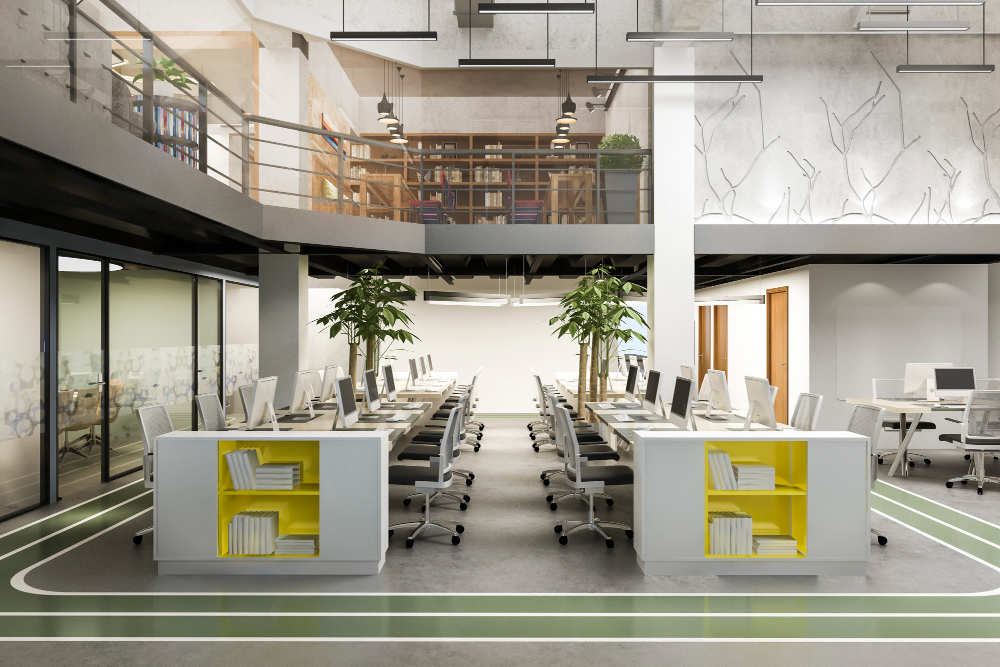
A hybrid open office layout uses shared desks with low dividers to improve communication and teamwork while still giving employees personal work areas. This collaborative workspace setup works well for startups, creative teams, marketing agencies, and modern startup office design projects because it saves floor space and supports fast interaction between employees.
Perimeter Office Layout
A perimeter office layout places desks along the walls, leaving the center area open for movement and flexibility. This space saving office layout makes small offices appear larger and works especially well for narrow office spaces, compact office design plans, and small office floor planning with limited square footage.
Zoned Office Layout
A zoned office layout divides the office into separate areas for meetings, focused work, client discussions, and team collaboration. These office zoning ideas are useful for consultants, clinics, agencies, and service businesses that need both privacy and functional office design within a small office layout.
Best Office Layout Based on Business Type
Different businesses require different office layouts based on workflow, client interaction, privacy needs, and team collaboration. Choosing the right setup improves productivity, employee comfort, space efficiency, and overall workplace functionality.
Office Layout for Startups
Startup office setup usually focuses on open collaboration, flexible seating, and modular desks that can easily adapt as teams grow. Shared workstations, movable furniture, and open communication spaces help startups maximize limited office space while supporting teamwork and fast daily operations.
Office Layout for Client-Facing Businesses
Businesses that regularly meet clients need a professional office reception layout with dedicated consultation areas and comfortable waiting spaces. Consultants, clinics, and service businesses benefit from clear zoning between employee workstations and client interaction areas for better privacy and smoother communication.
Office Layout for Creative Teams
Small agency office design works best with collaborative zones, brainstorming corners, and informal seating arrangements that encourage idea sharing. Creative teams often perform better in flexible office environments where employees can easily communicate, discuss projects, and work together comfortably.
Office Layout for Small Professional Firms
Office layout for consulting firms, accounting companies, and legal offices should focus on quiet workspaces, perimeter desk arrangements, and privacy focused planning. These layouts reduce distractions while supporting concentration, confidential discussions, and organized daily workflow inside compact office spaces.
How to Plan a Small Office Layout Efficiently
Efficient office space planning starts with analyzing workflow, employee movement, storage needs, and daily operations. A flexible office setup helps small businesses adapt as teams grow while improving productivity, comfort, and organization. The best office flow usually keeps collaborative spaces open, quiet zones separated, and desks positioned for natural movement and lighting.
• Evaluate current employee numbers and future business growth
• Study daily employee movement inside the office carefully
• Plan enough storage for files and office equipment
• Separate client facing and internal work areas properly
• Create spaces supporting teamwork and focused individual work
• Plan electrical points and internet access locations early
• Position desks near windows for natural lighting benefits
• Choose flexible furniture supporting future office expansion easily
Space-Saving Office Design Ideas for Small Offices
Modern office fit-out ideas focus on saving space while improving comfort, storage, and productivity. Small offices benefit from vertical storage, modular furniture, flexible layouts, and better workstation organization.
Smart Workstation Arrangements
Cluster Desks: Grouping desks for teams improves collaboration while saving office space in customer support, sales, and startup office workstation layout plans.
Linear Layouts: Straight desk arrangements work well for narrow office spaces, allowing smoother movement and efficient, compact office desk placement.
Modular Furniture: Flexible modular office furniture allows businesses to reconfigure workstations easily as teams grow or office requirements change.
Sit-Stand Desks: Adjustable desks improve employee comfort, posture, movement, and workspace flexibility inside modern small office environments.
Storage and Partition Solutions
Storage Walls: Floor-to-ceiling storage walls reduce clutter while maximising small office organisation and freeing valuable floor space.
Glass Partitions: Glass office partitions create privacy without blocking natural light, making small offices feel brighter and more spacious.
Under Desk Storage: Compact under desk drawers help employees organize documents and supplies without overcrowding office workstations.
Floating Shelves: Wall mounted shelves increase storage capacity while keeping office floors open and visually cleaner.
Best Office Layout Features for Productivity and Employee Comfort
A productive office design supports both teamwork and focused work while improving employee comfort and daily workflow. Many small offices in Dubai and Abu Dhabi now use hybrid office layouts combining collaborative workspaces with private focus areas.
- Quiet Focus Pods: Small private pods reduce distractions and support focused work, confidential calls, and individual productivity inside busy office environments.
- Meeting Corners: Compact meeting areas create dedicated spaces for team discussions, client conversations, and quick collaborative sessions without disturbing nearby employees.
- Breakout Coffee Areas: Small breakout corners improve employee relaxation, informal communication, and workplace comfort during busy office schedules.
- Noise Reduction Solutions: Acoustic panels, partitions, and soft furnishing materials help control office noise and improve concentration levels for employees.
- Comfortable Seating: Ergonomic seating supports posture, reduces discomfort, and improves employee wellness during long working hours inside office environments.
- Proper Desk Spacing: Adequate spacing between desks improves movement, airflow, comfort, and overall office functionality for employees and visitors.
- Airflow and Lighting: Proper ventilation and balanced office lighting create a healthier, brighter, and more comfortable employee friendly office layout.
Common Small Office Layout Mistakes to Avoid
Cluttered office layouts reduce productivity, employee comfort, and movement efficiency. Avoiding common small office planning errors helps create a more organized and professional workspace.
• Overcrowding desks reduces movement and employee workplace comfort
• Poor lighting creates eye strain and reduced productivity
• Ignoring storage increases clutter inside small office spaces
• Missing meeting spaces affects communication and client discussions
• Excessive partitions make offices feel smaller and restrictive
• Blocked pathways reduce office movement and workplace efficiency
• Prioritizing aesthetics weakens daily office functionality and workflow
• Poor cable management creates clutter and workplace hazards
Creating a Comfortable and Space-Efficient Office
The best office layout for small businesses balances collaboration, privacy, storage, comfort, and future flexibility within limited office space. Hybrid layouts, ergonomic furniture, smart zoning, and efficient storage solutions help create a more productive and professional work environment. Businesses planning office upgrades should also consider professional support from a modern interior design company to improve office functionality, employee experience, and long-term space efficiency.