Hotel terrace design now decides whether guests stay longer, spend more, and remember your hotel after checkout. Many luxury hotels invest heavily indoors but lose revenue and guest attention because their outdoor hotel spaces feel uncomfortable, poorly planned, or unusable during most of the day. A well-designed luxury hotel terrace can turn unused space into a social, dining, and wellness destination that supports both guest experience and brand value. Working with an experienced interior design company in RAK that services projects across the UAE ensures your terrace is not only visually appealing but also functional, climate-responsive, and aligned with operational needs. Read on to know how to plan layouts, concepts, materials, and operations that create high-performing luxury hotel terraces.
Why hotel terraces have become a key luxury feature
Modern travellers now actively search for hotels that offer open air spaces where they can relax, socialise, and enjoy views without leaving the property. A luxury hotel terrace is no longer seen as an extra feature, but as a core part of hotel guest experience design and hospitality outdoor design trends.
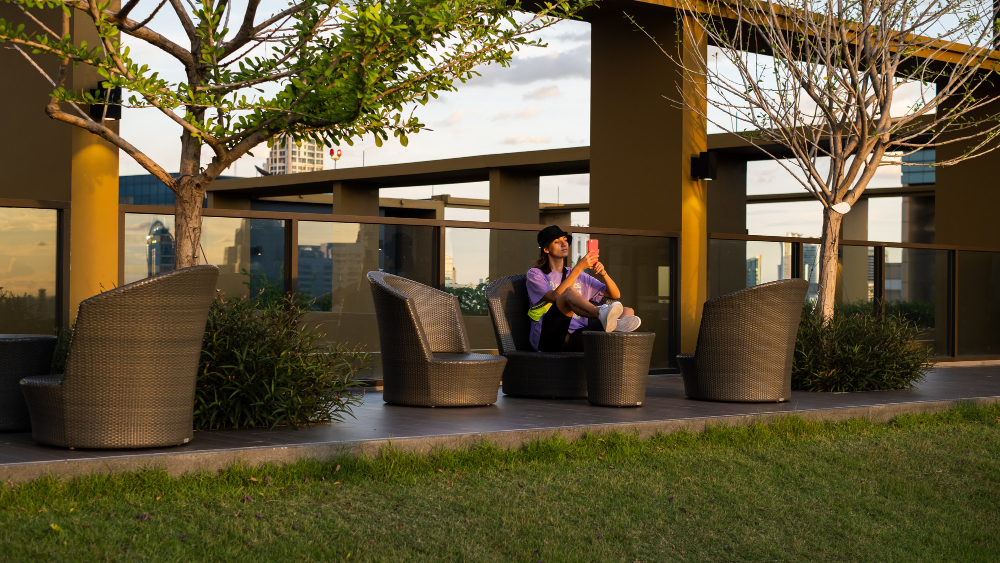
Rooftop hotel terrace dining, sunset lounges, and calm outdoor hotel spaces attract guests who want privacy, wellness, and visually appealing environments that work well for social sharing and personal relaxation.
How a well designed hotel terrace improves guest experience and revenue
A well planned hotel terrace design directly supports business performance by increasing guest engagement, improving service flow, and creating more opportunities for spending across the day and evening.
Guests tend to remain longer in outdoor public areas when seating is comfortable, shade is available, and movement feels natural, which increases food and beverage sales, improves online reviews, and strengthens visual branding for the hotel.
- Guests stay longer in lounges and dining areas when outdoor comfort is high.
- Terrace zones allow hotels to host private events, celebrations, and corporate bookings.
- Outdoor spaces become visual brand anchors for social media and marketing campaigns.
What defines luxury in hotel terrace design
Comfort driven layout planning
Luxury outdoor hospitality design begins with movement and comfort. Clear walking paths allow guests and staff to move without crossing service zones, while shaded and sun exposed seating areas allow guests to choose comfort based on weather and time of day. Proper spacing between seating groups improves privacy, supports relaxed conversation, and prevents crowding.
Material and surface quality
High quality hotel terrace furniture and surface finishes influence both safety and long term maintenance. Weather resistant flooring systems reduce surface damage, while premium stone, composite decking, and treated timber finishes maintain appearance under sun and moisture. Anti slip and heat resistant surfaces protect guests during peak daylight hours and support year round usability.
Lighting, mood, and night time usability
Lighting design for hotel terraces shapes how the space feels after sunset. Layered lighting combines ambient light for comfort, decorative lighting for mood, and functional lighting for circulation. Soft ambient fixtures improve visual comfort, while safety lighting around steps and edges protects guests and staff without disturbing the atmosphere.
Green design and biophilic elements
Biophilic hotel design connects guests with nature and supports relaxation. Planter zoning helps define seating areas, vertical gardens soften building edges, and climate adaptive plants reduce maintenance while improving shade, air quality, and visual appeal.
Popular luxury hotel terrace concepts in UAE
Rooftop dining and lounge terraces
Rooftop dining terraces focus on flexible layouts that support both intimate dining and social gatherings. Seating arrangements allow couples and groups to use the same space without conflict, while service flow between the kitchen and terrace is carefully planned to reduce waiting time and improve operational efficiency.
Poolside and wellness terraces
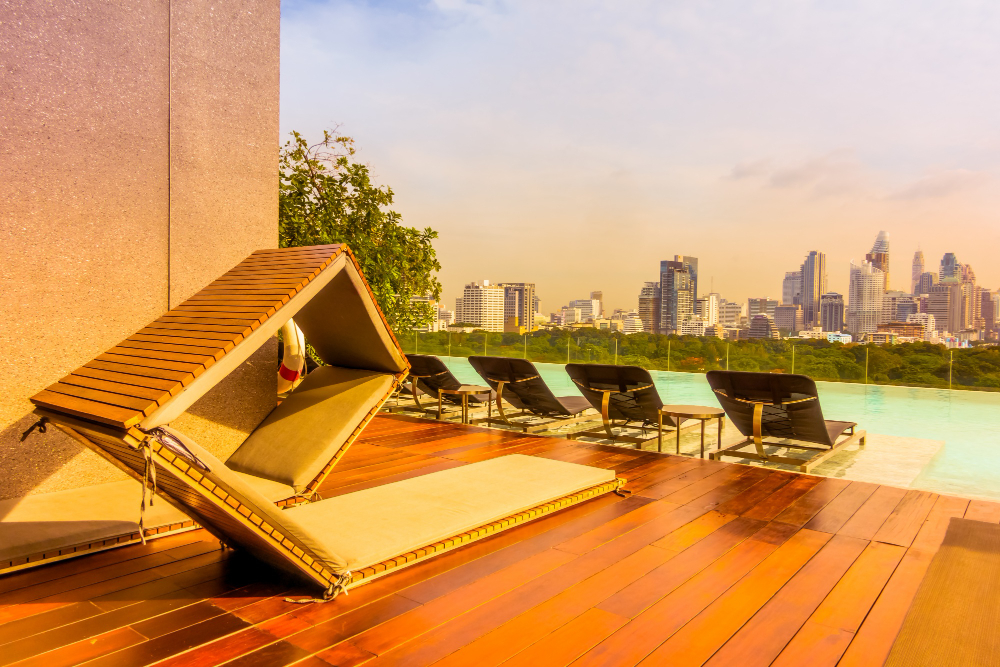
Poolside terraces combine relaxation and wellness into one environment. Cabanas and shaded relaxation zones create privacy, towel and beverage access points improve guest comfort, and the separation of quiet areas and family zones supports different guest expectations without disturbance.
Event and social terraces
Event terraces are designed for rapid layout changes. Modular furniture allows quick reconfiguration, built in power and sound infrastructure supports live entertainment and presentations, and photo friendly branding backdrops strengthen marketing value during weddings, launches, and corporate functions.
How climate and location influence hotel terrace design decisions
- Wind direction and surrounding building heights decide where seating, screens, and lounge zones should be placed.
- Sun path and daily heat levels guide the position of shaded areas and open seating zones.
- Local climate conditions determine the need for heat resistant flooring and breathable outdoor furniture.
- Rain exposure and roof structure affect floor slopes, drainage layout, and surface safety.
- Skyline, sea, or city views influence where premium dining and lounge seating should be located.
- Nearby roads and neighbouring buildings shape privacy screens and noise protection planning.
- Site access and terrace orientation affect staff movement routes and service entry points.
Who should be involved in planning a luxury hotel terrace
Successful hotel terrace design in UAE requires close collaboration between design teams, hotel operations, and guest experience specialists who understand the city’s luxury hospitality standards and climate conditions. Hospitality architects plan structure and circulation for high guest volumes, landscape designers select heat tolerant planting and shade solutions, lighting specialists design night time comfort for outdoor dining and events, and hotel operations teams ensure that service flow works smoothly during peak hours and high occupancy periods.
Design direction and guest wellbeing practices are aligned with international hospitality and wellness guidance from the World Tourism Organization and the International WELL Building Institute, while being adapted to UAE’s hot climate, premium guest expectations, and long term sustainability goals.
When hotels should upgrade or redesign existing terraces
Hotels should consider upgrading outdoor spaces when guest usage remains low, shade and comfort are insufficient, furniture appears outdated or damaged, evening use is limited due to lighting or layout issues, or when safety and accessibility no longer meet current expectations.
- Guest usage remains low even during high occupancy periods.
- Shade and thermal comfort are not sufficient for daytime or summer use.
- Outdoor furniture looks outdated, damaged, or no longer matches the hotel’s luxury image.
- Evening use is limited because of poor lighting or inefficient layout.
- Safety and accessibility features do not meet current guest expectations.
- Service and staff movement create delays or disturb guest seating areas.
- The terrace layout does not support events, private bookings, or flexible use.
How to plan the layout of a hotel terrace step by step
A structured planning process improves both guest comfort and commercial performance.
- Define the primary purpose of the terrace, such as dining, social lounge, or wellness use.
- Analyse sun exposure, wind direction, and key view corridors.
- Zone dining, lounge, circulation, and service areas clearly.
- Select furniture and lighting based on usage duration and operational needs.
- Align service access routes and staff flow with seating layouts.
Simple zoning guide
| Zone type | Main purpose | Key design focus |
| Dining zone | Meals and service | Table spacing and shade |
| Lounge zone | Relaxation and drinks | Soft seating and lighting |
| Circulation | Guest movement | Clear paths and safety |
| Service access | Staff movement | Discrete and efficient |
Safety, accessibility, and operational flow in hotel terrace design
Hotel terrace safety design protects both guests and staff while supporting smooth service. Handrails and edge protection reduce fall risk, fire and evacuation paths must remain unobstructed, barrier free access allows inclusive use by all guests, and service corridors for staff prevent operational conflict with guest circulation.
Accessible outdoor hospitality spaces also improve review scores and broaden the terrace audience for families, elderly guests, and guests with mobility limitations.
How to choose the best designers for a luxury hotel terrace
- Choose designers who have proven experience in hotel terrace design, not only residential or retail outdoor projects.
- Check if the team has delivered luxury hotel or resort terraces that include dining, lounge, and event use.
- Confirm that the designer understands hotel operations and service flow, not just visual styling.
- Select professionals who can design for Dubai climate conditions, including heat, wind, and year round outdoor use.
- Ask for examples that show lighting design, furniture layout, and shading systems working together.
- Make sure the designer collaborates closely with hotel management and operations teams during planning.
- Review how the designer handles safety, accessibility, and crowd movement in previous hospitality projects.
- Choose a design team that can support the project from concept to site execution and final handover.
Sustainable and future ready hotel terrace ideas
Sustainable terrace design increases long term asset value and reduces operating costs. Low water planting supports local climate conditions, recycled materials reduce environmental impact, energy efficient lighting lowers power use, and smart shading systems adjust comfort throughout the day while protecting furniture and finishes.
Future ready terraces allow flexible use without major reconstruction, which protects investment value over time.
Inspiration from iconic luxury hotel terraces
Well known projects such as Marina Bay Sands demonstrate how rooftop experiences become global brand icons through strong visual identity, integrated leisure concepts, and clear guest flow planning.
Similarly, Burj Al Arab Jumeirah shows how exclusive outdoor settings, privacy focused layouts, and premium finishes can support luxury positioning while enhancing guest perception of service quality.
Common design mistakes that reduce terrace performance
Design mistakes often reduce the commercial and experiential value of outdoor hotel spaces.
- Poor furniture durability causes rapid visual decline and frequent replacement.
- Ignoring climate exposure leads to uncomfortable seating and unused zones.
- Lack of storage and service access disrupts daily operations.
- Overcrowded layouts reduce privacy and comfort.
- Weak lighting planning limits evening activity and safety perception.
Creating terraces that deliver both luxury and performance
Luxury hotel terraces succeed when design decisions focus equally on guest comfort, operational efficiency, and long term asset value. Strong hotel terrace design integrates layout planning, climate response, lighting strategy, material quality, and service flow into one cohesive experience. By avoiding common design mistakes and planning for future flexibility, hotels can transform outdoor spaces into high performing destinations that support guest satisfaction, revenue growth, and brand positioning for years to come.