Do you know why some institutions feel organised and welcoming the moment you step in? Interior design is not only about creating stylish homes, luxury offices, or modern retail spaces. Institutional interior design focuses on planning and designing interiors for various institutions, including schools, hospitals, government offices, libraries, museums, and universities.
It is different from residential and commercial interior design, as institutional interiors prioritise functionality, safety, adaptability, and ease of use. The major goal of institutional interior designers is to create environments that are efficient, pleasing, and that meet the specific needs of the institution.
Concept of institutional interior design
The interior designers carefully plan layouts and choose durable materials and focus on timeless design that can adapt to the future needs of the institution. For example, a hospital needs calm spaces and wide corridors for using wheelchairs and stretchers, while a school library needs quiet zones that enhance the atmosphere for learning and reading.
Essential elements of institutional interior design
Functionality
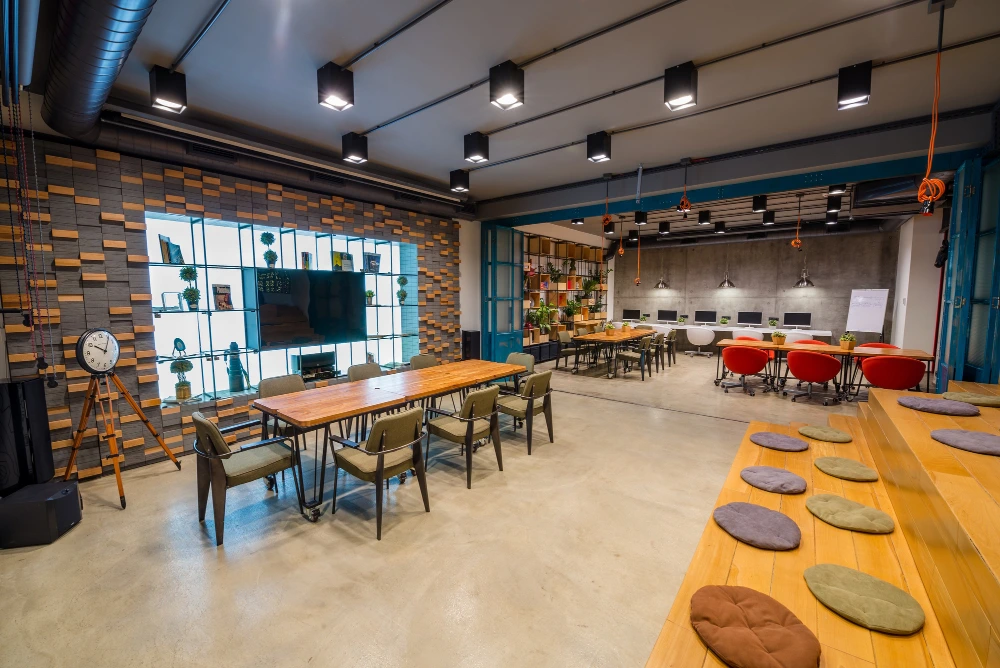
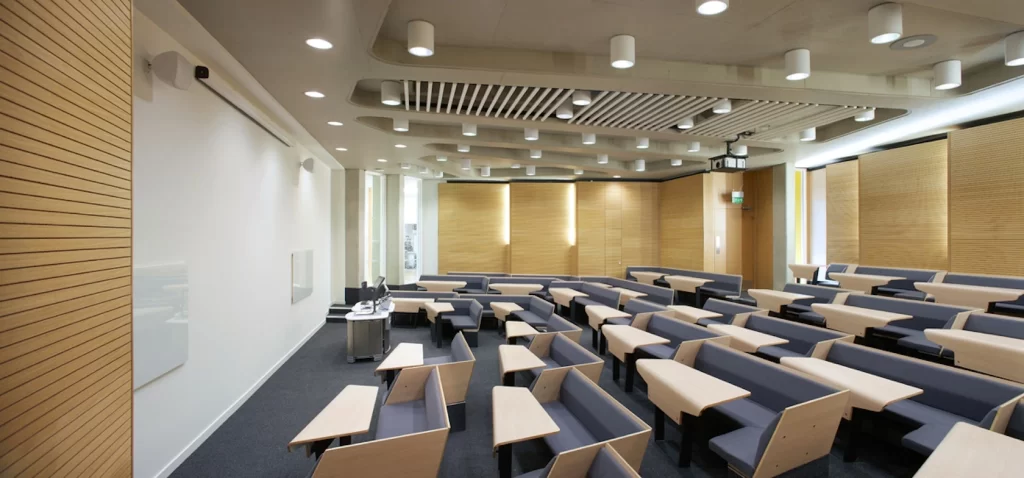
The most important element of institutional interiors is functionality. In a school auditorium, the seating layout is designed to ensure clear visibility of the stage for the students, and the acoustics must be arranged so that the audio is clear. Also, the layout of the university library should have collaborative tables, quiet study areas, and a digital space that provides a learning environment for the students.
Accessibility
A government building should have wheelchair-friendly entrances and clear signage to deliver the information to the public clearly. Since government hospitals or buildings have to serve everyone, they must be accessible to all people.
Lighting
Both artificial and natural light in an institution affect the mood and productivity of the users. The flow of natural light reduces stress and improves concentration, and artificial lighting ensures consistent light throughout the day.
Comfortable furniture
The furniture used in the institutions must be durable, ergonomic, and suitable for heavy use. It should also match the functionality of the institution. Scratch-resistant desks and ergonomic chairs are suitable for children for long hours of study in schools. A hospital waiting area needs easy-to-clean seating arrangements to ensure comfort and hygiene for patients and visitors.
Institutional Identity
The interior design must reflect the purpose, culture, and values of the institution. For example, a museum can use themed interiors, colors, and display lighting that reflect cultural heritage. Meanwhile, a university can showcase its brand colors in common areas to strengthen the brand identity.
Technological integration
Institutional design must support technology for efficiency and allow space for digital tools, smart systems, and future upgrades. A smart classroom must have interactive whiteboards, charging stations, and projector systems. And, a conference hall in an office should have video conferencing setups, soundproofing, and integrated screens for presentations.
Challenges of institutional interior design
Client expectations
One of the main challenges in the interior design of institutions is managing the client’s expectations. Generally, institutions like schools, hospitals, or libraries have specific requirements regarding functionality, branding, and aesthetics. Fulfilling these expectations within the time and budget is often challenging.
A school may want a classroom or auditorium that is modern but low-cost. So the designers have to carefully communicate with the clients about the realistic outcomes while delivering functional and impactful interiors.
Cost management
Budget constraints are another common challenge while interior designing for institutions. The clients usually need durable, safe, high-quality materials, but the cost can increase quickly. Effective cost management usually needs creative solutions, prioritization, and compromise without affecting the functionality or aesthetics.
For renovating a library, using a durable and stylish flooring can exceed the budget, so interior designers may choose cost-effective materials that look appealing and last long. While in the hospital, the furniture and finishes must be hygienic and easy to maintain, so smart material choices are important.
Space utilization
Maximizing the utilization of space while ensuring comfort and efficiency is another challenge. Institutional interiors often have to serve multiple purposes and have heavy foot traffic. Poor planning of the layout will result in overcrowding or underutilized areas.
Coordination with stakeholders
Institutional projects usually involve multiple stakeholders like management teams, contractors, suppliers, and other authorities. Therefore, ensuring smooth communication and timely decision-making can be complex, but it is important for project success.
For example, renovation of a government office might require approvals from different departments for layout changes and modifications. So, designers might have to coordinate with everyone to avoid delays and meet all requirements.
Material selection
Choosing the right materials for the interior design of institutions is important for durability and maintenance. Designers must consider these factors while staying within the budget. For example, schools need scratch-resistant and nontoxic furniture for safety and durability. Hospitals need surfaces that can withstand heavy cleaning. So, it is important to select materials that are practical, safe, and suitable for the institution’s identity.
Conclusion
Institutional interior designers create spaces that are functional, safe, and comfortable according to the institution’s and its users’ needs. Though challenges like client expectations, budget limits, and space planning exist, experienced designers consider these as opportunities for innovation.
Partnering with a trusted interior design company in RAK ensures that your project meets its functional requirements while creating efficient and long-lasting interiors.