A well-designed office should support productivity without creating unnecessary distractions. Open-plan offices are increasingly popular in the UAE because they offer flexibility, encourage collaboration, and make efficient use of available space. However, conversations, phone calls, meetings, office equipment, and foot traffic can create constant background noise when there are few physical barriers.
Excessive noise can make it difficult for employees to concentrate and complete tasks efficiently. It may also contribute to fatigue, stress, and reduced workplace satisfaction. For this reason, acoustic planning should be considered from the early stages of commercial interior design UAE, helping create a comfortable, productive, and functional workplace.
Why Noise Is a Bigger Problem in Open Offices
Open-plan offices can quickly become noisy because sound has fewer physical barriers to stop it from travelling. Large spaces with reflective surfaces such as glass, concrete, tiles, and hard ceilings can allow sound to bounce around and spread across different work areas instead of being absorbed.
Common sources of noise include:
- Conversations between employees
- Phone calls and virtual meetings
- Team meetings and discussions
- Printers, copiers, and other office equipment
- HVAC systems, fans, and ventilation
- Foot traffic around workstations
When these sounds occur continuously, employees may find it harder to concentrate on their tasks. Persistent background noise can also contribute to fatigue and stress, reduce productivity, and affect overall employee satisfaction.
Core Principles of Acoustic Design for Offices
Effective acoustic design for offices focuses on controlling how sound is absorbed, blocked, and managed within a workspace. Instead of relying on one solution, a combination of these three approaches can help create a quieter and more comfortable open office.
- Absorb: Use acoustic ceiling panels, wall panels, carpets, acoustic flooring, and upholstered furniture to absorb sound and reduce reverberation.
- Block: Use partitions, acoustic screens, meeting rooms, and phone booths to create physical barriers that prevent sound from travelling between different areas.
- Cover: Use sound masking and controlled background noise to reduce the clarity of nearby conversations and make distractions less noticeable.
Combining absorption, sound barriers, and controlled background noise provides more effective noise control than using any single method on its own.
Use Layout and Zoning to Control Noise
The layout of an open office plays an important role in controlling how sound travels. Dividing the workspace according to different activities can help keep noisy areas away from employees who need quiet surroundings.
Separate Noisy and Quiet Areas
Meeting rooms, collaboration areas, and breakout spaces should be positioned away from focus workstations wherever possible. Teams that frequently handle phone calls can also be placed away from employees who need extended periods of concentration. This simple zoning approach can reduce the amount of unwanted noise reaching quieter work areas.
Create Buffer Zones
Buffer zones can help reduce direct sound transmission between noisy and quiet spaces. Corridors, storage areas, reception areas, plants, and other support spaces can be positioned between these zones to create additional separation and minimise distractions.
Plan Workstations Carefully
Workstation placement can also influence how much speech and activity employees hear throughout the day. Avoid positioning desks directly opposite each other where possible, and provide sufficient spacing between workstations. Grouping employees according to their work activities can further help keep similar noise levels together and improve overall workplace comfort.
Choose Acoustic Materials for Ceilings, Walls and Floors
The right materials can significantly reduce noise and prevent sound from bouncing around an open office. When selecting acoustic finishes, designers should consider the size and layout of the space, expected noise levels, durability, maintenance requirements, and the practical needs of UAE offices.
Acoustic Ceilings
Acoustic ceiling treatments can absorb sound from conversations, meetings, and office activity before it travels across the workspace. Acoustic ceiling tiles, suspended acoustic clouds, and baffles can help reduce reverberation, particularly in large offices with high ceilings. Materials with suitable NRC or SAA performance ratings can be selected according to the acoustic requirements of the space.
Acoustic Walls and Partitions
Walls and partitions can help absorb sound and limit its movement between different work areas. Acoustic wall panels can be installed on reflective surfaces, while higher workstation partitions can provide additional separation between employees. Acoustic glass with suitable sound-control properties can also be used for meeting rooms and phone booths when businesses want to maintain visual openness without compromising privacy.
Acoustic Flooring
Flooring can help reduce footfall and impact noise, particularly in busy office areas. Carpet tiles, acoustic underlays, and other impact-reducing flooring solutions can make workspaces quieter and more comfortable. Material choices should also consider durability, ease of cleaning, maintenance, and suitability for the demands of UAE office environments.
Use Furniture and Interior Elements to Reduce Noise
Furniture and interior elements can do more than improve the appearance of a workspace. When selected carefully, they can also absorb sound, break up sound paths, and create a more comfortable environment. This makes them an important part of functional Office interiors, particularly in open-plan workplaces.
- Upholstered chairs and sofas: Soft seating materials can absorb some sound and reduce reflections.
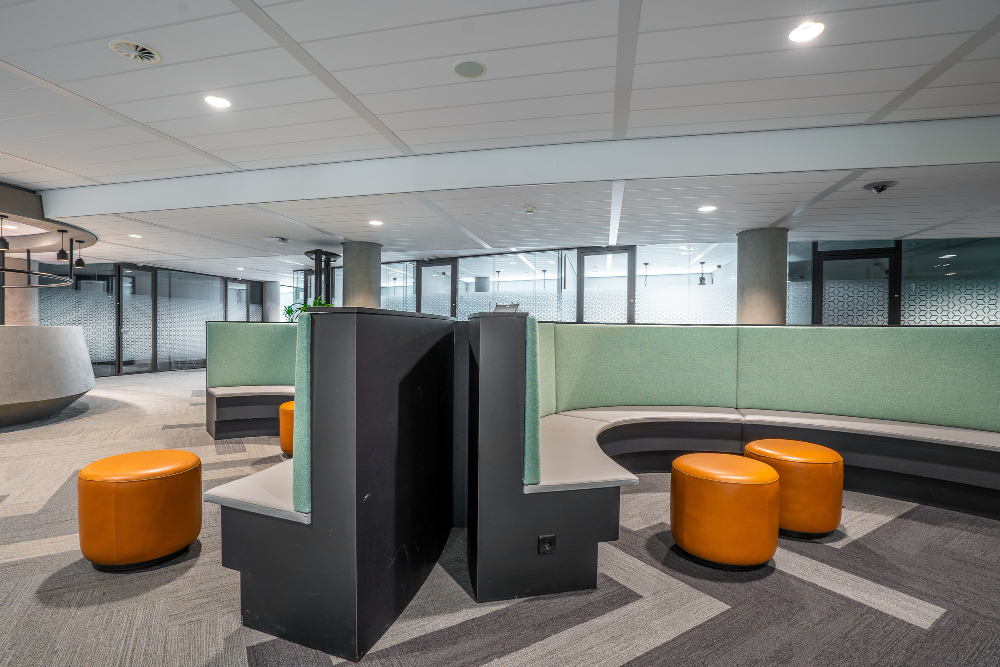
- Acoustic furniture: Acoustic sofas, booths, and seating systems can provide both sound absorption and informal spaces for collaboration.
- Desk screens: Acoustic desk screens can reduce direct speech between neighbouring workstations.
- Fabric panels: Fabric-covered panels can be installed on walls or other suitable surfaces to help absorb sound.
- Curtains and blinds: Soft window treatments can help reduce sound reflections from large glass surfaces.
- Acoustic lighting: Lighting fixtures with sound-absorbing materials can combine lighting and acoustic functions.
- Plants and storage units: Strategically placed plants, shelves, and storage units can help break up open spaces and interrupt direct sound paths.
Using these elements thoughtfully allows designers to balance acoustic performance, functionality, and aesthetics without making the office feel overly enclosed.
Add Phone Booths, Acoustic Pods and Quiet Rooms
Phone booths and acoustic pods provide dedicated spaces for phone calls, virtual meetings, and short discussions without adding noise to the main office floor. Placing them near collaborative or busy areas can encourage employees to move conversations away from shared workstations.
Quiet rooms can be used for focused work, confidential discussions, or tasks that require fewer distractions. Simple usage rules, such as limiting group meetings and keeping conversations brief, can help ensure these spaces remain available for employees who need a quieter environment.
Use Sound Masking and Background Noise Control.
Sound masking is the use of a low, consistent background sound to make nearby conversations less noticeable and reduce speech intelligibility in open workspaces. When properly designed and evenly distributed, it can help minimise distractions and create a more comfortable acoustic environment.
As part of acoustic design for offices, sound masking should be professionally planned and adjusted according to the size and layout of the workspace. It works best alongside sound-absorbing materials and effective zoning rather than replacing them.
Control Noise from HVAC, Lighting, and Office Equipment
Building systems and everyday office equipment can contribute significantly to background noise. Addressing these sources during the design and planning stage can help create a quieter and more comfortable workplace.
- Specify low-noise HVAC systems to minimise sound from air-conditioning and ventilation.
- Properly design ducts and diffusers to reduce airflow and mechanical noise.
- Use vibration isolation for mechanical equipment to prevent vibrations from travelling through the building.
- Keep printers, copiers, and other noisy equipment away from focus workstations.
- Choose quieter appliances for kitchens and other shared areas.
- Check lighting fixtures and drivers to prevent unwanted buzzing or humming.
Acoustic Considerations for UAE Office Interiors
UAE offices often have high ceilings, large open spaces, glass façades, and hard finishes that allow sound to travel and reflect. Heavy use of HVAC systems can also add background noise, while diverse workplaces make speech privacy important.
Acoustic planning should be considered from the start of a commercial fit-out. Choosing suitable materials, zoning spaces, and coordinating HVAC requirements can improve comfort and support the goals of commercial interior design UAE.
Practical Checklist for Reducing Open-Office Noise
A few practical measures can make a significant difference to noise levels in an open office. Use the following checklist when planning or improving the workspace:
- Identify and map the main sources of noise.
- Separate quiet areas from noisy zones.
- Improve sound absorption through the ceiling.
- Add acoustic wall panels and partitions where needed.
- Choose suitable acoustic flooring.
- Include sound-absorbing furniture.
- Provide phone booths or quiet rooms.
- Consider a professionally designed sound masking system.
- Review noise from HVAC systems and office equipment.
- Establish simple workplace noise guidelines.
Conclusion
Reducing noise in open offices requires a combination of thoughtful layout, acoustic materials, suitable furniture, enclosed spaces, technology, and good workplace practices. Planning these solutions from the beginning can prevent costly changes later. Working with experienced designers and acoustic specialists can help businesses create a more comfortable and focused environment. Effective acoustic design for offices can ultimately support better concentration, productivity, and employee satisfaction.